Health and Safety Policy — Commercial Waste Southwark
Policy statement and scope
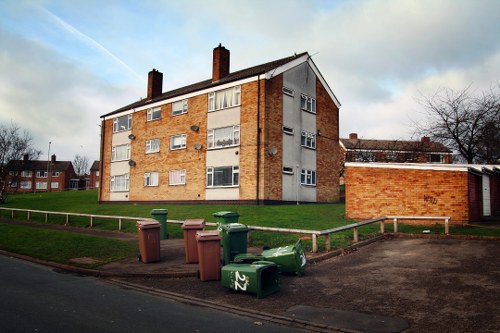 Commercial Waste Southwark is committed to maintaining a safe and healthy workplace for all employees, contractors and visitors. This Health and Safety policy applies across our operations including commercial rubbish collection, waste transfer, recycling and disposal services within our rubbish company service area and associated service zones. The policy sets out our approach to risk control, training, incident reporting and continuous improvement in occupational safety while performing waste management and rubbish removal duties.
We recognise that safe operations depend on clear leadership, competent staff and robust procedures. The objectives of this policy are to prevent injury and ill health, protect the environment and ensure compliance with relevant industry standards. Managers and supervisors are expected to embed this policy in daily tasks, route planning, vehicle loading and on-site segregation. Employees are required to follow safe systems of work and use the equipment provided for the safe handling of commercial waste across our service region.
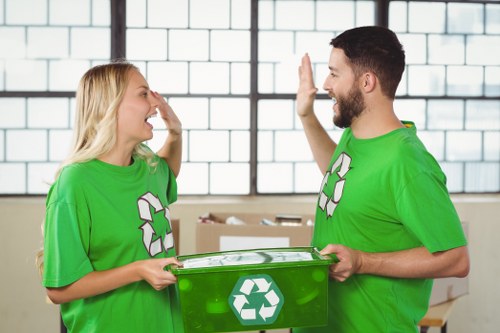 The policy covers all activities where hazards may arise: manual handling of bins and sacks, operation of compactors and balers, safe driving and vehicle maintenance, handling of hazardous or contaminated loads, lifting operations and working near public spaces. It applies to temporary and permanent work sites, customer premises where waste is collected, and at our depots in the broader rubbish removal service area.
Responsibilities and organisation
Senior management holds overall accountability for health and safety. Supervisors are responsible for implementing safe working procedures and ensuring crews have the necessary training and personal protective equipment (PPE). Individual employees must actively participate in safety briefings, report hazards promptly and follow safe operating procedures for waste collection and transfer. We promote a culture where safety concerns can be raised without fear of repercussion.
Risk assessment and control measures
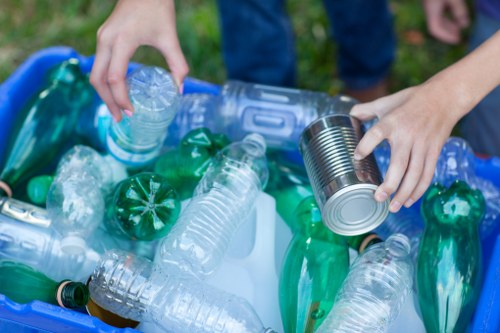 Risk assessments are carried out for routine and non-routine tasks. Controls follow the hierarchy of risk reduction: elimination, substitution, engineering controls, administrative controls and PPE. Typical controls include:
- Safe manual handling techniques and mechanical lifting aids for heavy or bulky rubbish.
- Clear segregation and labelling of hazardous wastes to prevent contamination.
- Routine vehicle checks and secure load practices to protect drivers and the public in the service area.
Where specific waste streams present additional risks (e.g., sharps, chemicals, contaminated materials), additional precautions are enforced and only trained personnel are authorised to manage these loads within our commercial rubbish service territory.
Training, equipment and PPE
All staff receive induction training that covers manual handling, vehicle safety, emergency procedures and correct use of PPE. Regular refresher training and toolbox talks reinforce safe practices in the rubbish company service area and across our operational footprint. Training records are maintained and evaluated to ensure competence.
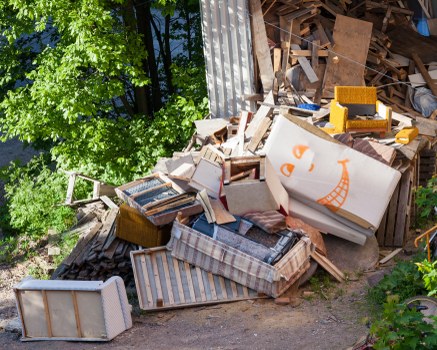 Operational equipment and PPE are selected to match the assessed hazards: high-visibility clothing, gloves suited to waste types, steel-toe footwear and eye protection where required. Vehicles are fitted with appropriate safety features and signage, and drivers receive defensive driving and load restraint training to mitigate risks during collection and transfer rounds.
 Emergency preparedness includes clear procedures for spill control, first aid provision, fire response and reporting of dangerous occurrences. We maintain incident response kits at depots and in key vehicles, and ensure that nominated first-aiders are available during all shifts in the rubbish clearance service area.
Incident reporting and investigation
All incidents, near misses and occupational illnesses must be reported without delay. Reports are investigated to identify root causes and to implement corrective actions. Learnings from investigations are communicated across teams to prevent reoccurrence. We apply a no-blame approach to encourage reporting of near misses and unsafe conditions.
Monitoring and performance: We monitor health and safety performance through routine inspections, audits and review of incident trends. Key performance indicators include lost-time incidents, near miss reports and completion rates for safety training. Continuous improvement is driven by management review and feedback from operational teams working within the waste collection and rubbish removal service network.
Our policy is reviewed at regular intervals and whenever significant operational changes occur. Updates are communicated to all staff and incorporated into training and operational procedures to ensure ongoing relevance across the commercial waste and rubbish collection service areas.
Environmental and wellbeing considerations
Health and safety measures also aim to protect the broader environment. Safe segregation, containment and handling reduce the risk of pollution during collection and transport. Additionally, we support employee wellbeing through fatigue management, mental health awareness and safe workload planning to reduce stress and enhance overall safety in the rubbish company service area.
Policy endorsement: This Health and Safety policy is endorsed by senior management and is a core element of our operational commitment. All employees, contractors and stakeholders engaged in commercial waste services are expected to uphold these standards and contribute to a safe working environment.
Review: The policy will be formally reviewed at least annually and updated as necessary to reflect operational changes, emerging risks and improvements in industry best practice for rubbish removal and waste services.
